Public statements, press releases, and selected board comments.
This page collects EASL 3616 statements and press releases by date, along with selected board comments when they are relevant. When available, we include links to the public meeting video.
Latest
Schools Must Be Places of Safety, Not Fear. EASL 3616 stands in solidarity with educators, students, and families calling for schools to be treated as protected spaces—focused on learning and student well-being, not fear or intimidation.
Press Releases
A dated archive of EASL 3616 press releases (most recent first).
Board Comments
Selected comments to the School Board when they provide useful context or address a significant issue.
Transcript
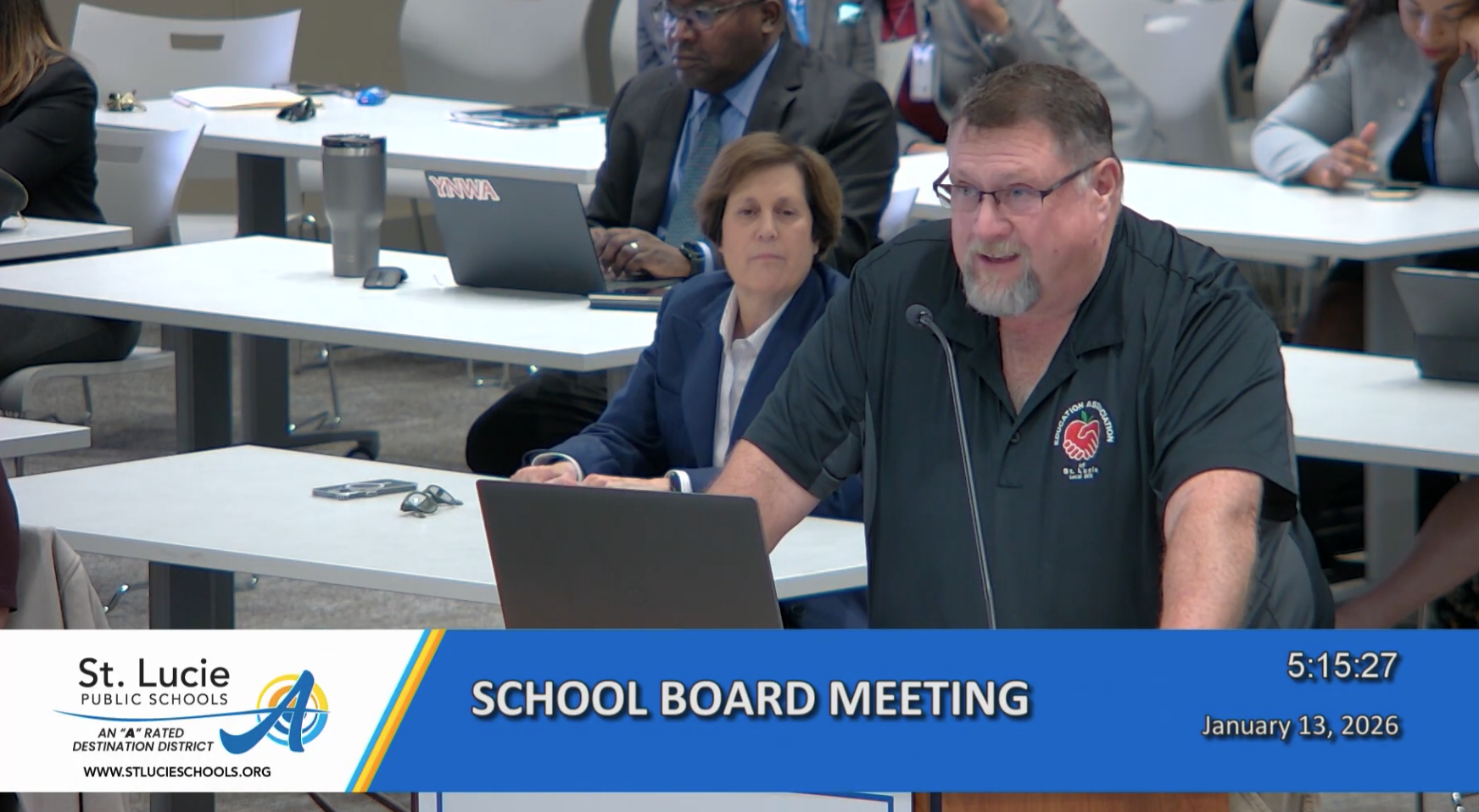
Good evening, Chairman Ingersoll, Board members, Superintendent Prince.
Earlier this week, I gave an interview about educator vacancies and retention. In that conversation, I made one point unmistakably clear, and I want to restate it here tonight. The educator shortage in Florida is a state-created problem. It stems from decisions made at the state level, not by this board and not by this district. I drew that line intentionally. Accuracy matters, and so does credibility.
State policy caused the crisis.
Local culture determines how survivable it is.
We did not create the statewide problem, but we do have influence over how it is felt here. And in a moment when the profession is under extraordinary pressure, local choices can either soften the impact or unintentionally make it heavier. That is where our opportunity lies.
Right now, teachers are being asked to carry more responsibility than ever: instructional demands, documentation, interventions, communication, compliance. Expectations continue to grow, and almost nothing is removed to make space for what's added. I raise this not to point fingers, but because it highlights a tension we can address together: balancing necessary structure with trust in professional expertise to better support our students and keep talented educators here. This is about systems and signals, not individuals. When professional judgment is replaced with rigid control, the message educators hear is not about support or instructional quality. The result is less responsive teaching for students.
And to be clear, this is not about adult convenience. It is about instructional quality for students. The district and the union share the same goal: doing what is best for students. Where we sometimes differ is not on the goal, but on the method. We believe students are best served when effective teachers are trusted to practice their craft with minimal intrusion, and when intervention is targeted and warranted, not automatic. If St. Lucie County wants to retain experienced educators and attract new ones, trust matters. Autonomy matters. Respect matters.
That does not mean abandoning consistency or accountability. It means recognizing that effective teachers are professionals, and that their expertise, flexibility, and judgment are assets that strengthen student learning, not liabilities to be managed. In my interview, I did not criticize this district. That remains true. But as an advocate for educators in St. Lucie, I also have a responsibility to speak honestly about the conditions that push people out of the profession. Teachers do not leave because the work is hard. They leave when they feel controlled rather than respected.
We cannot fix the state tonight. But we can make St. Lucie a district where educators want to come, stay, and build long, meaningful careers, a district that turns a statewide challenge into a local advantage.
State policy caused the crisis.
Local culture will determine how we respond to it.
Thank you.